
=== WordPress Importer === Contributors: wordpressdotorg Donate link: https://wordpressfoundation.org/donate/ Tags: importer, wordpress Requires at least: 5.2 Tested up to: 6.4.2 Requires PHP: 5.6 Stable tag: 0.8.2 License: GPLv2 or later License URI: https://www.gnu.org/licenses/gpl-2.0.html Import posts, pages, comments, custom fields, categories, tags and more from a WordPress export file. == Description == The WordPress Importer will import the following content from a WordPress export file: * Posts, pages and other custom post types * Comments and comment meta * Custom fields and post meta * Categories, tags and terms from custom taxonomies and term meta * Authors For further information and instructions please see the [documention on Importing Content](https://wordpress.org/support/article/importing-content/#wordpress). == Installation == The quickest method for installing the importer is: 1. Visit Tools -> Import in the WordPress dashboard 1. Click on the WordPress link in the list of importers 1. Click "Install Now" 1. Finally click "Activate Plugin & Run Importer" If you would prefer to do things manually then follow these instructions: 1. Upload the `wordpress-importer` folder to the `/wp-content/plugins/` directory 1. Activate the plugin through the 'Plugins' menu in WordPress 1. Go to the Tools -> Import screen, click on WordPress == Changelog == = 0.8.2 = * Update compatibility tested-up-to to WordPress 6.4.2. * Update doc URL references. * Adjust workflow triggers. = 0.8.1 = * Update compatibility tested-up-to to WordPress 6.2. * Update paths to build status badges. = 0.8 = * Update minimum WordPress requirement to 5.2. * Update minimum PHP requirement to 5.6. * Update compatibility tested-up-to to WordPress 6.1. * PHP 8.0, 8.1, and 8.2 compatibility fixes. * Fix a bug causing blank lines in content to be ignored when using the Regex Parser. * Fix a bug resulting in a PHP fatal error when IMPORT_DEBUG is enabled and a category creation error occurs. * Improved Unit testing & automated testing. = 0.7 = * Update minimum WordPress requirement to 3.7 and ensure compatibility with PHP 7.4. * Fix bug that caused not importing term meta. * Fix bug that caused slashes to be stripped from imported meta data. * Fix bug that prevented import of serialized meta data. * Fix file size check after download of remote files with HTTP compression enabled. * Improve accessibility of form fields by adding missing labels. * Improve imports for remote file URLs without name and/or extension. * Add support for `wp:base_blog_url` field to allow importing multiple files with WP-CLI. * Add support for term meta parsing when using the regular expressions or XML parser. * Developers: All PHP classes have been moved into their own files. * Developers: Allow to change `IMPORT_DEBUG` via `wp-config.php` and change default value to the value of `WP_DEBUG`. = 0.6.4 = * Improve PHP7 compatibility. * Fix bug that caused slashes to be stripped from imported comments. * Fix for various deprecation notices including `wp_get_http()` and `screen_icon()`. * Fix for importing export files with multiline term meta data. = 0.6.3 = * Add support for import term metadata. * Fix bug that caused slashes to be stripped from imported content. * Fix bug that caused characters to be stripped inside of CDATA in some cases. * Fix PHP notices. = 0.6.2 = * Add `wp_import_existing_post` filter, see [Trac ticket #33721](https://core.trac.wordpress.org/ticket/33721). = 0.6 = * Support for WXR 1.2 and multiple CDATA sections * Post aren't duplicates if their post_type's are different = 0.5.2 = * Double check that the uploaded export file exists before processing it. This prevents incorrect error messages when an export file is uploaded to a server with bad permissions and WordPress 3.3 or 3.3.1 is being used. = 0.5 = * Import comment meta (requires export from WordPress 3.2) * Minor bugfixes and enhancements = 0.4 = * Map comment user_id where possible * Import attachments from `wp:attachment_url` * Upload attachments to correct directory * Remap resized image URLs correctly = 0.3 = * Use an XML Parser if possible * Proper import support for nav menus * ... and much more, see [Trac ticket #15197](https://core.trac.wordpress.org/ticket/15197) = 0.1 = * Initial release == Frequently Asked Questions == = Help! I'm getting out of memory errors or a blank screen. = If your exported file is very large, the import script may run into your host's configured memory limit for PHP. A message like "Fatal error: Allowed memory size of 8388608 bytes exhausted" indicates that the script can't successfully import your XML file under the current PHP memory limit. If you have access to the php.ini file, you can manually increase the limit; if you do not (your WordPress installation is hosted on a shared server, for instance), you might have to break your exported XML file into several smaller pieces and run the import script one at a time. For those with shared hosting, the best alternative may be to consult hosting support to determine the safest approach for running the import. A host may be willing to temporarily lift the memory limit and/or run the process directly from their end. -- [Support Article: Importing Content](https://wordpress.org/support/article/importing-content/#before-importing) == Filters == The importer has a couple of filters to allow you to completely enable/block certain features: * `import_allow_create_users`: return false if you only want to allow mapping to existing users * `import_allow_fetch_attachments`: return false if you do not wish to allow importing and downloading of attachments * `import_attachment_size_limit`: return an integer value for the maximum file size in bytes to save (default is 0, which is unlimited) There are also a few actions available to hook into: * `import_start`: occurs after the export file has been uploaded and author import settings have been chosen * `import_end`: called after the last output from the importer import { Heading, Text } from '@elementor/app-ui'; import ConditionsProvider from '../../context/conditions'; import { Context as TemplatesContext } from '../../context/templates'; import ConditionsRows from './conditions-rows'; import './conditions.scss'; import BackButton from '../../molecules/back-button'; export default function Conditions( props ) { const { findTemplateItemInState, updateTemplateItemState } = React.useContext( TemplatesContext ), template = findTemplateItemInState( parseInt( props.id ) ); if ( ! template ) { return
{ __( 'Not Found', 'elementor-pro' ) }
; } return (
{ { __( 'Where Do You Want to Display Your Template?', 'elementor-pro' ) } { __( 'Set the conditions that determine where your template is used throughout your site.', 'elementor-pro' ) }
{ __( 'For example, choose \'Entire Site\' to display the template across your site.', 'elementor-pro' ) }
history.back()} />
); } Conditions.propTypes = { id: PropTypes.string, }; La Storia di Chicken Road: Il Gioco da Casinò che Ha Scatenato l’Italia – App do Ben

La Storia di Chicken Road: Il Gioco da Casinò che Ha Scatenato l’Italia

Compartilhe essa notícia

Negli ultimi tempi, il gioco da casinò online ha conosciuto un’inaspettata ascesa in Italia, e al centro di questo fenomeno c’è il gioco di Chicken Road. Questo gioco, originario di Chicken Road, è diventato un fenomeno di massa, conquistando il cuore di molti giocatori italiani. Ma dietro la fascinosa superficie di Chicken Road, ci sono problemi e rischi che non possono essere ignorati.
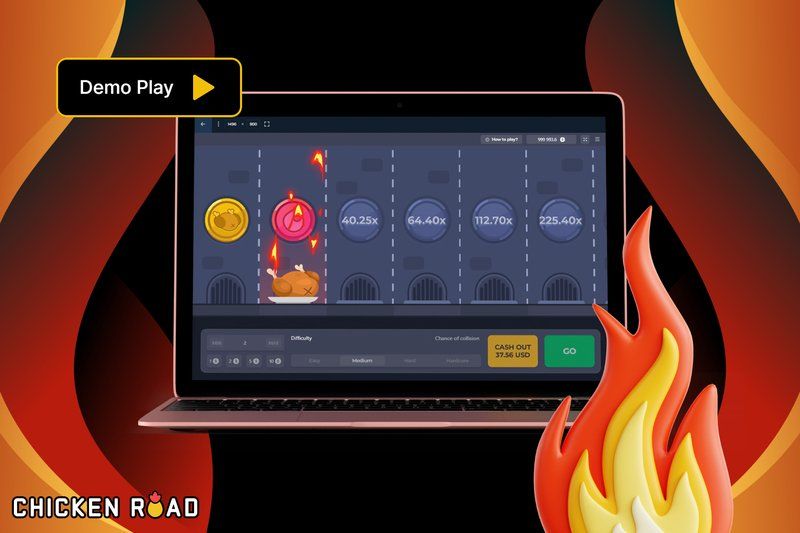
Scopri di più su chicken road ufficiale

1. L’ascesa di un fenomeno

Il gioco da casinò che ha conquistato l’Italia

La storia di Chicken Road è una storia di successo, ma anche di rischi. Questo gioco è nato come una semplice demo, ma è stato in grado di conquistare il mercato italiano con la sua grafica realistica e le sue caratteristiche uniche. Ma cosa lo rende così unico?

Caratteristica Descrizione
Grafica realistica Una grafica di alta qualità che simula l’esperienza di un gioco da casinò reale
Varie opzioni di gioco Una vasta gamma di opzioni di gioco, dalle classiche slot machine ai tavoli di poker
Funzionalità di gioco responsabile Una serie di funzionalità che aiutano i giocatori a giocare in modo responsabile

2. Problemi di gioco e dipendenza

Il lato oscuro di Chicken Road: il rischio di dipendenza

Il gioco da casinò online può diventare un problema per molti giocatori, e Chicken Road non fa eccezione. I segnali di dipendenza possono essere difficili da riconoscere, ma ci sono alcune caratteristiche che possono indicare un problema.

Segnale di dipendenza Descrizione
Gioco compulsivo Giocare per ore senza interruzione
Necessità di giocare sempre di più Sentire la necessità di giocare sempre di più per sentirsi soddisfatto
Nascondere il gioco Nascere il gioco da amici e familiari

3. Problemi di sicurezza e truffe

Il pericolo delle truffe online: cosa fare?

Le truffe online sono un problema serio, e Chicken Road non è immune da questo rischio. Ma come riconoscere le truffe e come proteggersi da esse?

Truffa Descrizione
Truffa di identità Un hacker che si fa passare per un giocatore per ottenere informazioni personali
Truffa di pagamento Un hacker che cerca di ottenere i pagamenti dei giocatori

4. Conclusioni e riflessioni

La lezione di Chicken Road: un gioco da non sottovalutare

La storia di Chicken Road è una storia di successo e di rischi. Il gioco da casinò online può essere un problema per molti giocatori, ma ci sono strategie per giocare in modo responsabile e per proteggersi da truffe e frodi online. La lezione di Chicken Road è che il gioco da casinò non deve essere sottovalutato, e che è importante giocare in modo consapevole e responsabile.